
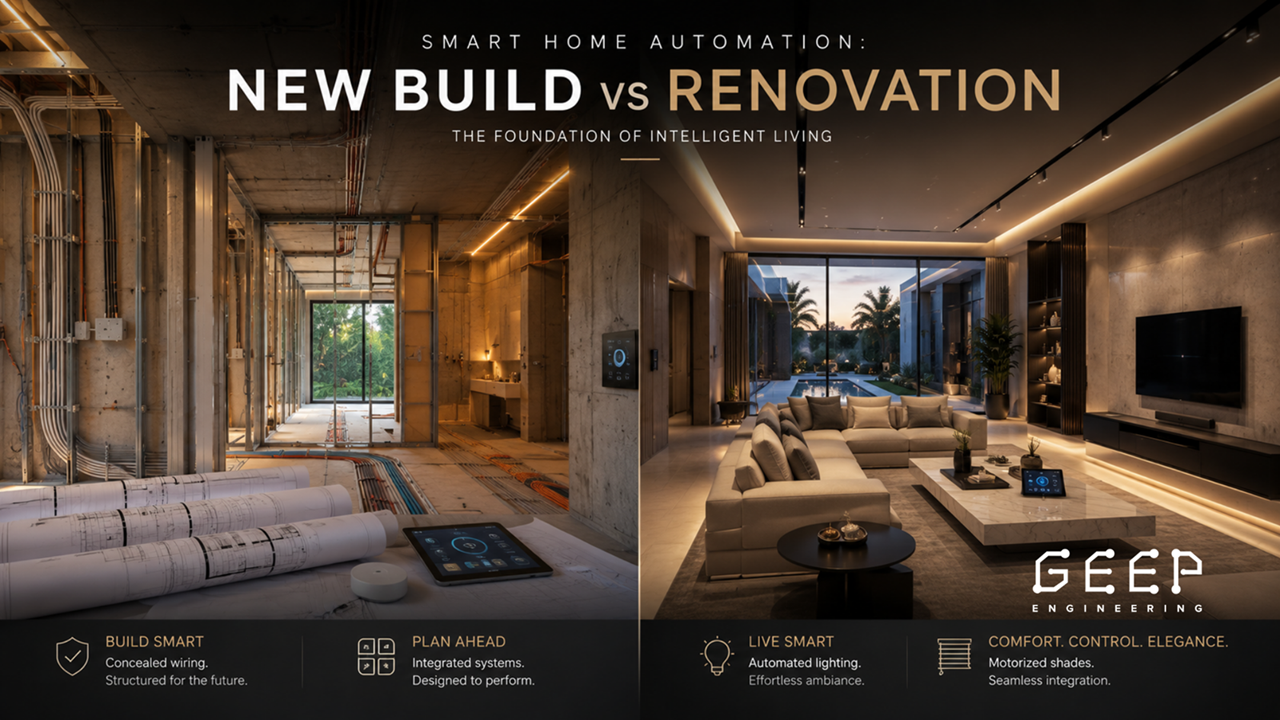
Smart home automation in Lagos is no longer a novelty in premium residential projects — but the path to a reliable system depends heavily on when you plan it. A new build in Lekki offers options that a finished Ikoyi apartment cannot. A renovation in an occupied home demands phasing and restraint that an empty shell does not.
This article compares both routes so you can prioritise budget, reduce rework, and end up with a system people actually use every day.
What "Smart Home Automation" Should Mean
At minimum, a well-integrated home connects lighting, shading, climate, security, and entertainment into coherent scenes — controlled from wall panels, remotes, or apps — with stable networking underneath.
At its best, automation fades into the background: lights respond to time and occupancy, shades protect furnishings from heat, AV sources switch without confusion, and staff or family members share simple, consistent controls.
That level of reliability rarely comes from a basket of consumer gadgets. It comes from planning, wiring, unified control, and local support.
New Build: Maximum Flexibility
Advantages
- Concealed infrastructure — cable routes, rack locations, and conduit before plaster and marble finishes.
- Coordinated trades — electricians follow integrator drawings for keypads, dimming, and network paths.
- Room-by-room design — each space gets the right level of automation instead of a one-size template.
- Cleaner aesthetics — fewer surface-mounted devices and wireless bridges later.
What to Lock In Early
- Network core (rack or closet location, cooling, power)
- Lighting control type (wired dimming vs smart bulbs — wired wins for reliability at scale)
- Shading motorisation and power at windows
- Pre-wire for cinema, whole-home audio, and outdoor areas
- Security: camera positions, door stations, gate integration
Developers marketing "smart ready" homes should define what that includes. Empty conduit alone is not automation.
Renovation: Phasing and Priorities
Most Lagos homeowners encounter automation during a refresh — new kitchen, upgraded living room, or staff turnover exposing how awkward legacy switches and remotes have become.
Realistic Priorities for Phased Work
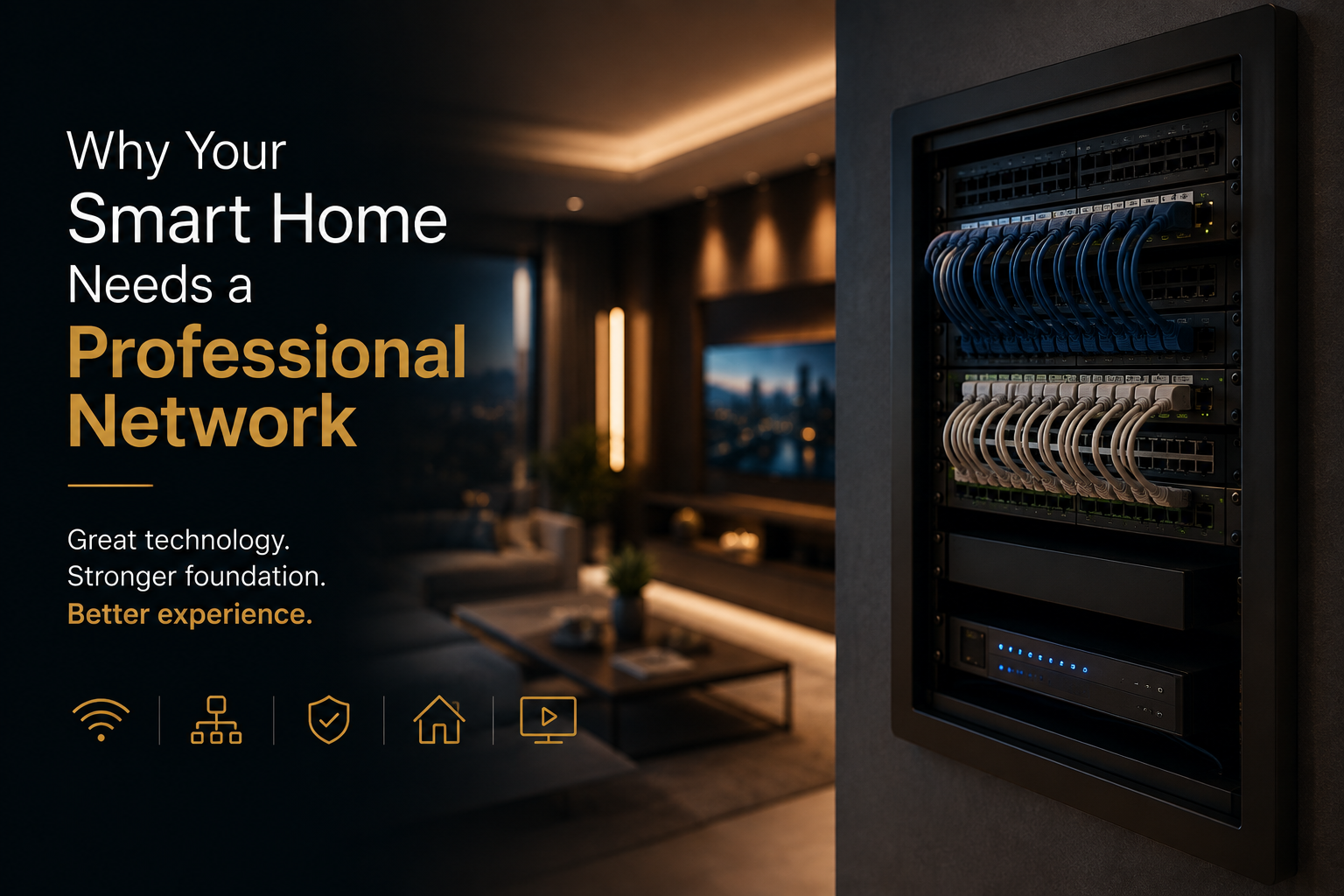
- Network first — mesh Wi-Fi is not a substitute for structured cabling and proper access points in large homes.
- Lighting in high-use zones — living, dining, master suite, and entrance often deliver the highest daily benefit.
- Shading where sun load is worst — west-facing rooms in Lagos heat up quickly; automated shades reduce AC load and protect interiors.
- AV consolidation — one clean interface for TV, streaming, and sound in the rooms you use most.
Renovation Constraints
- Limited ceiling access after false ceilings are finished
- Heritage finishes where chasing walls is unacceptable
- Occupied homes — work must be scheduled room by room
- Legacy wiring of unknown quality
A good integrator will tell you what not to automate yet instead of forcing wireless patches everywhere.
Budget: Where Money Actually Goes
Clients often assume the "smart" cost is apps and gadgets. In professional projects, spend typically splits across:
- Infrastructure (network, racks, cabling, labour)
- Control platform and programming
- End devices (keypads, dimmers, shades, sensors)
- AV and entertainment zones
- Commissioning, documentation, and support
Skimping on infrastructure to afford more visible touchscreens is a common reason systems feel flaky six months later.
New Build vs Renovation: Quick Comparison
- Timeline — new build: align with MEP and interior schedules; renovation: phased, often slower per room but faster to first value in one zone.
- Aesthetics — new build wins for invisible install; renovation may accept selective surface devices.
- Cost control — new build avoids double labour; renovation may include making-good after cable routes.
- Flexibility — new build allows Atmos cinemas and whole-home audio easily; renovation may limit speaker placement.
Local Considerations in Lagos
- Power quality — conditioning and UPS for network and control gear improve uptime.
- Climate — rack ventilation and equipment placement matter year-round.
- Staff use — interfaces must work for household staff as well as owners; complexity kills adoption.
- Remote oversight — owners travelling abroad often want secure remote status and control; plan for that in the network design.
Questions to Ask Any Integrator
- Who programmes and supports the system locally after handover?
- Is there a single platform for lighting, shading, AV, and security — or a patchwork of apps?
- What documentation do we receive (as-built drawings, IP plan, credentials)?
- How are firmware updates and changes handled?
- Can we expand room by room without rip-and-replace?
Related Reading
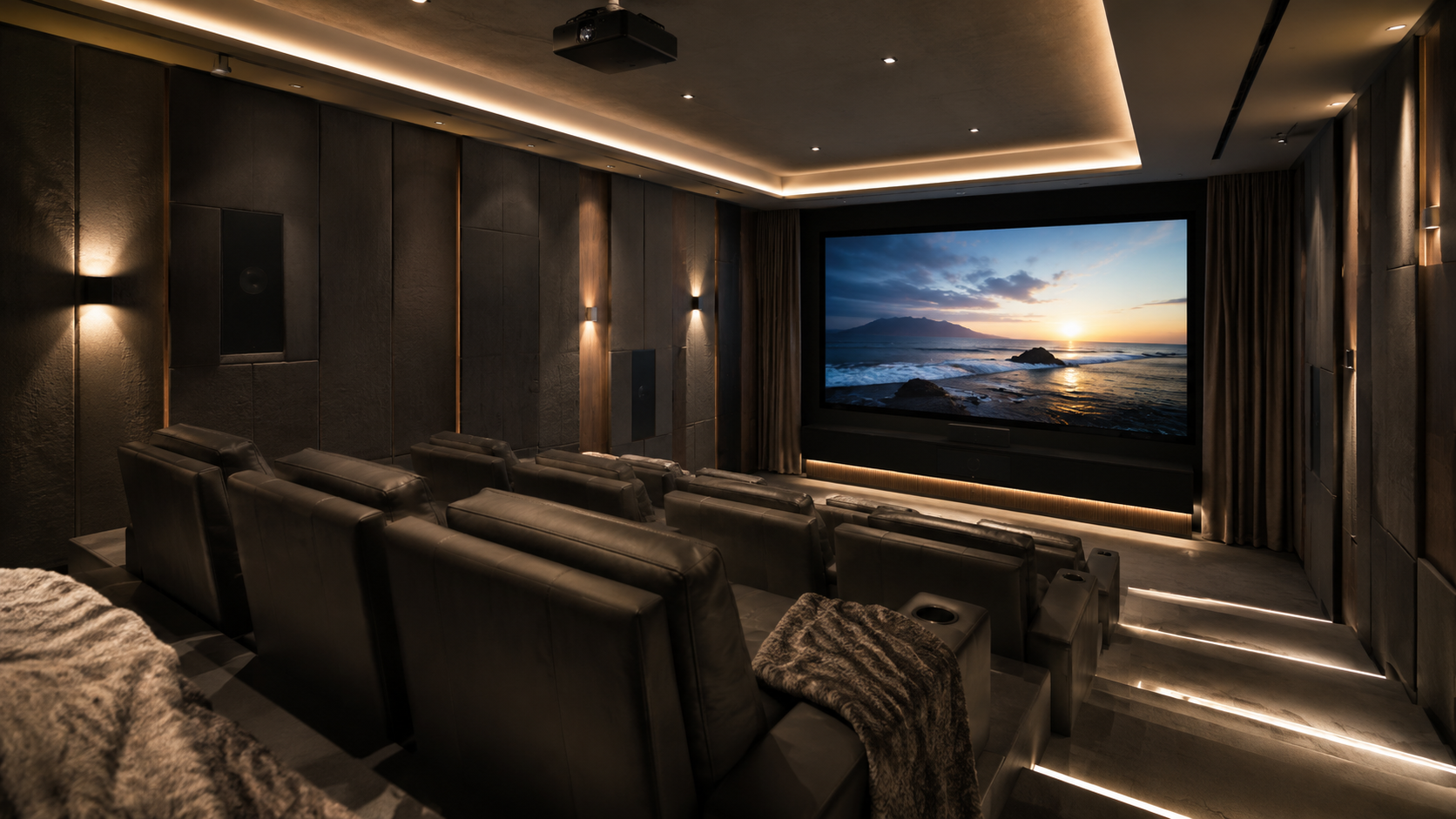
If you are also planning dedicated entertainment spaces, pair this with planning guidance for home cinema design in Lagos. For whole-property sound, see our article on fixing multi-room audio properly.
Next Step
GEEP Engineering delivers smart home automation for new and existing homes across Lagos — design, integration, and ongoing support. Share your plans, floor layouts, or renovation scope via our contact page or email hello@geepengineering.com.