
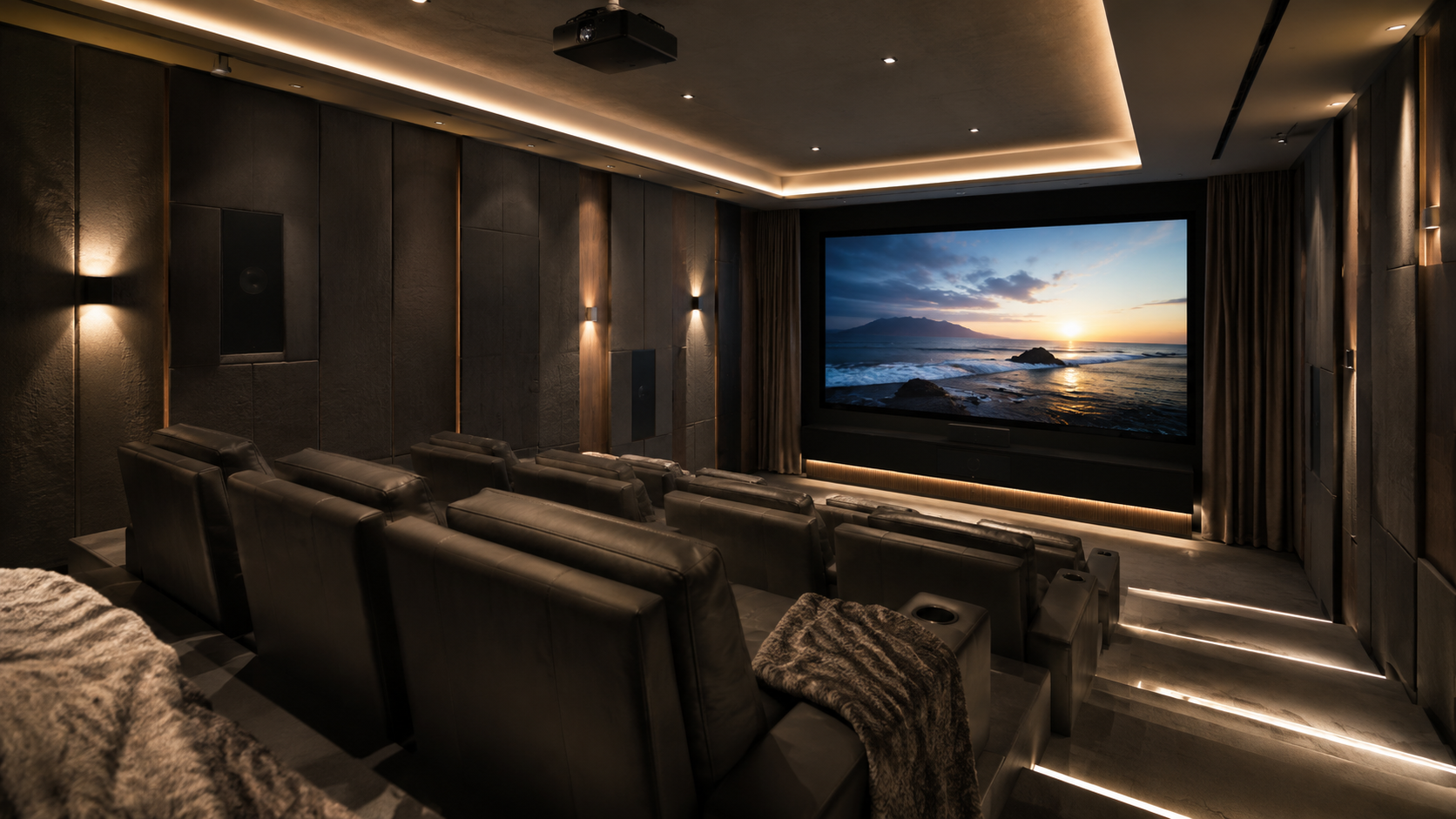
A home cinema in Lagos is rarely limited by ambition. It is limited by what gets decided before construction or renovation begins. Screen size, speaker placement, cabling routes, and light control are expensive to fix after drywall goes up — yet they are often treated as finishing details.
This guide covers the decisions that protect picture quality, sound, and long-term reliability in private cinemas across Lagos, Lekki, Ikoyi, and similar high-spec residential projects.
Start With the Room, Not the Equipment
Equipment lists are easy to share. Room behaviour is harder — and more important. Before specifying projectors, amplifiers, or speaker brands, clarify:
- Room dimensions and shape — long narrow rooms behave differently from square media rooms; ceiling height affects screen size and speaker layout.
- Windows and ambient light — Lagos daylight is strong; without shading or a dedicated dark room, even excellent projectors struggle.
- Seating layout — the number of rows, riser height, and viewing angles determine screen height and speaker aim before any rack is built.
- Noise paths — adjacent bedrooms, staff quarters, or shared walls mean isolation and subwoofer placement need early thought.
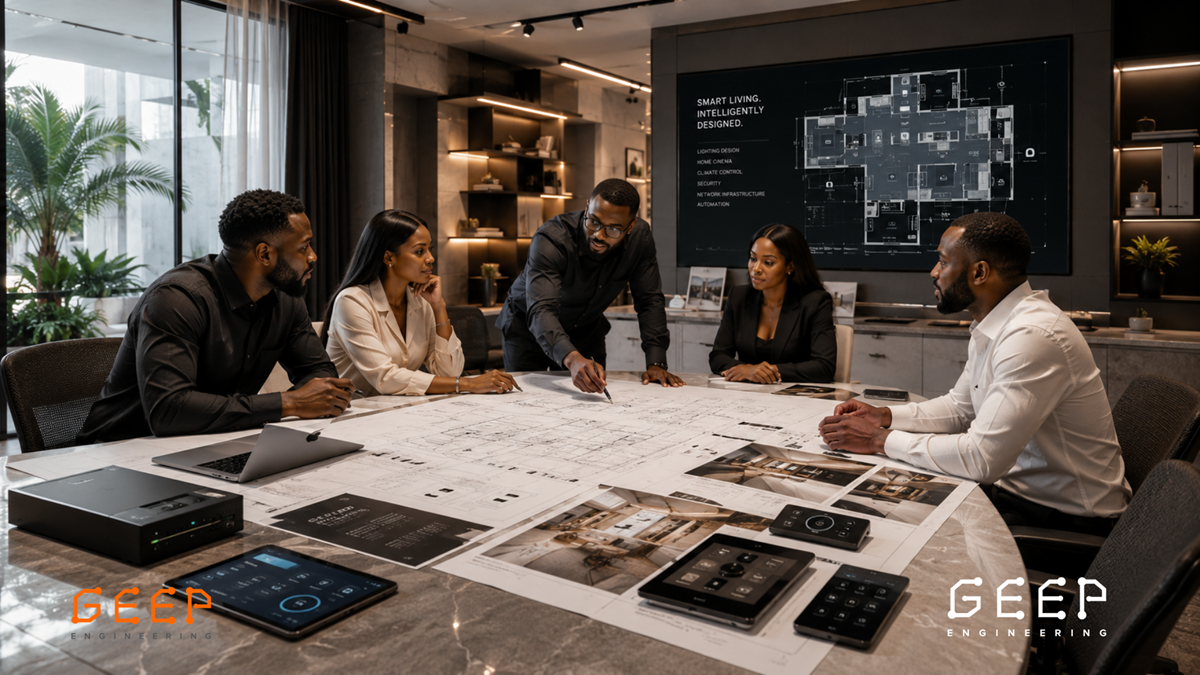
A cinema that looks impressive on paper can underperform if the room fights the system. Integrators who design around the space — not around a product catalogue — deliver better results.
Picture: Screen, Projector, and Light Control
Screen Size and Viewing Distance
There is a comfortable range for viewing distance relative to screen width. Too close feels overwhelming; too far wastes resolution and impact. In practice, seating layout should be fixed first, then screen size — not the other way around.
Projector vs Large-Format Display
Projectors remain the default for dedicated cinemas. Large LED/LCD panels can work in brighter multipurpose rooms but introduce different sizing and mounting constraints. Match the display type to how the room will actually be used — movies only, or sports and gaming too.
Light Control Is Non-Negotiable
Automated blackout shading, door seals, and minimal reflective surfaces (including the wrong paint finish) materially improve contrast. In Lagos projects, this often means coordinating with architects and interior designers early, not adding shading after handover.
Sound: More Than "Good Speakers"
Clients often ask for a speaker brand before anyone asks how sound will travel in the room.
- Speaker layout — Dolby layouts (5.1, 7.1, Atmos) depend on ceiling height and seating; not every room suits every configuration.
- Subwoofer placement — bass builds up or cancels in corners; one sub in the wrong place can boom on some seats and disappear on others.
- Acoustic treatment — absorption and diffusion are not "optional extras" in reflective rooms with hard finishes; they stabilise dialogue and surround effects.
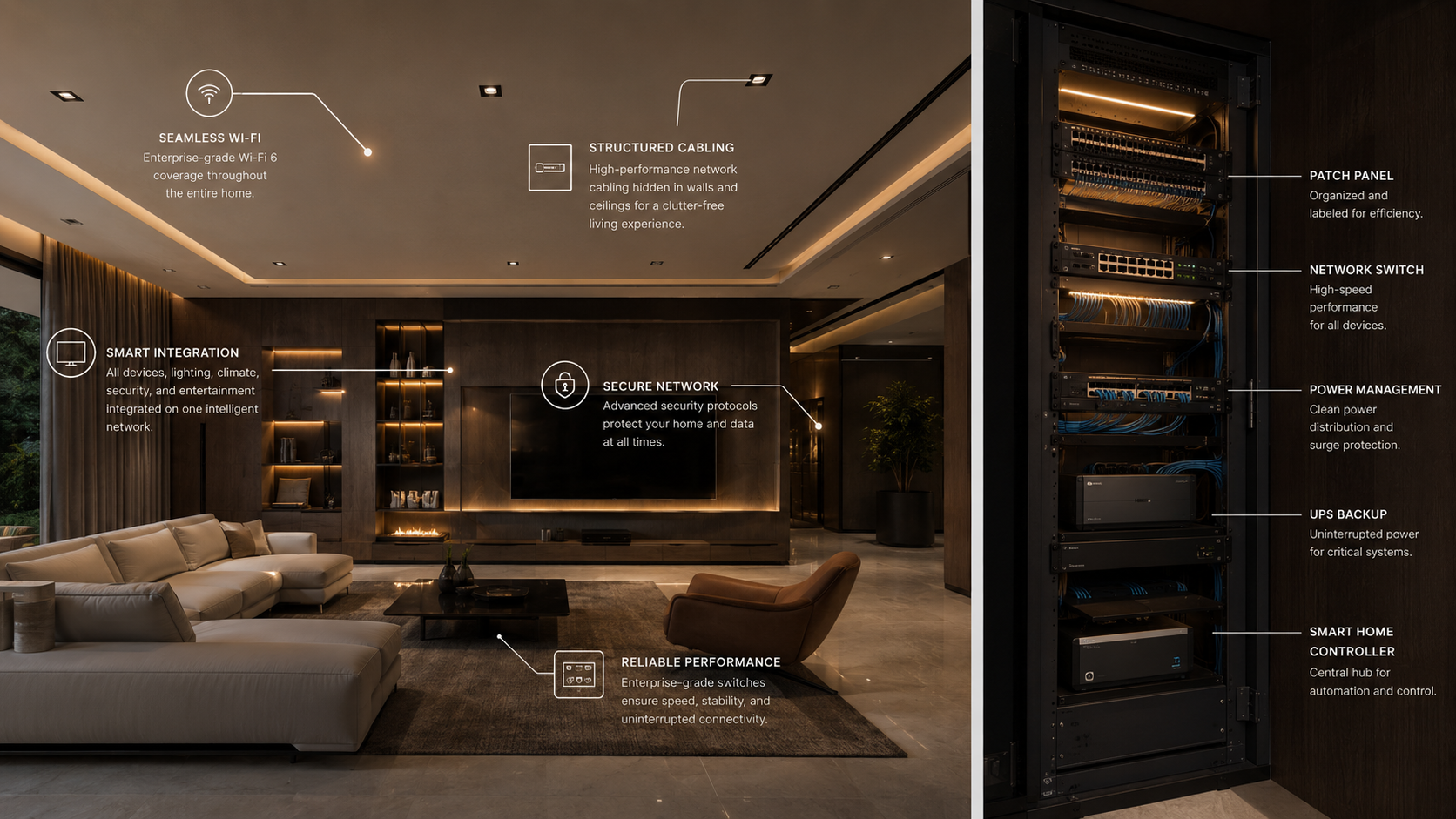
- Equipment location — rack placement, ventilation, and service access affect reliability in Nigeria's climate; gear locked in a hot closet fails sooner.
If you already have a multi-room audio system elsewhere in the home, the cinema should still be designed as its own zone — shared amplification without proper zoning often compromises both experiences.
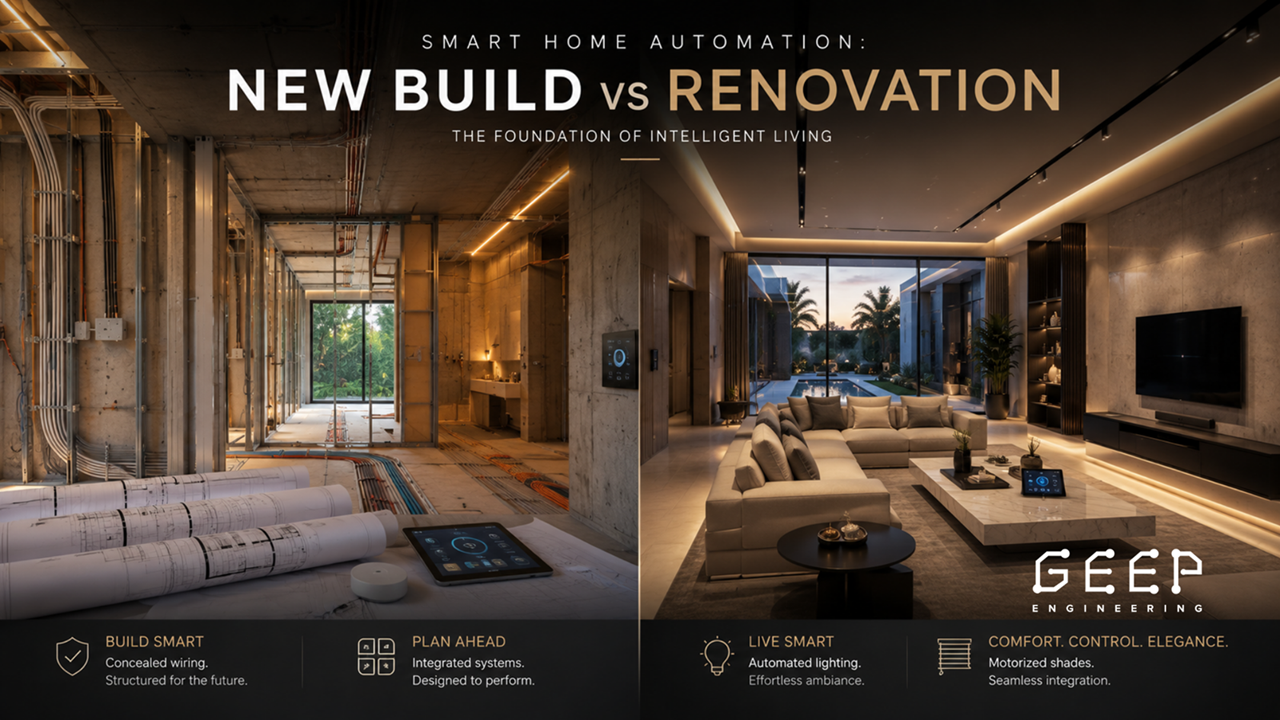
Cabling, Infrastructure, and Future-Proofing
The invisible part of cinema design is what future-you will thank you for:
- HDMI and speaker cable routes before finishes
- Conduit for upgrades (e.g. 8K sources, gaming consoles, streaming boxes)
- Network drops for smart control, updates, and streaming
- Power conditioning and dedicated circuits where budget allows
- Labeled documentation so any integrator can service the system later
"We'll run cables later" usually means surface trunking, compromised aesthetics, or wireless workarounds that fail under 4K bandwidth or latency demands.
Control and Daily Use
A cinema that requires five remotes and a printed checklist will be used less than a simple one-touch scene: lights down, screen on, correct input, volume at a sensible default.
Plan for:
- One interface for family and staff (wall panel, handheld remote, or app — matched to who actually uses the room)
- Integration with whole-home lighting and shading where relevant
- Clear handover and support — especially in homes with changing staff
Common Mistakes in Lagos Home Cinema Projects
- Buying equipment before the room is defined — leads to mismatched throw distances, wrong screen sizes, or insufficient amplification.
- Treating acoustics as cosmetic — rugs and curtains help, but they rarely fix fundamental reflection problems alone.
- Ignoring ventilation and power — reliability suffers in warm, enclosed rack spaces.
- No single integrator accountable for the whole chain — electrician, AV vendor, and interior designer each assume someone else handled the "tech."
What to Ask Before You Sign Off
Whether you are building in Lekki Phase 1, Ikoyi, Banana Island, or a large estate outside the peninsula, ask your integrator:
- How was the room modelled for screen size and speaker placement?
- What happens to performance in daytime with partial shading?
- Where does equipment live, and how is it cooled?
- Who supports the system after installation — locally, not only by email abroad?
- What documentation and training are included at handover?
Strong answers to those questions predict a better outcome than any single premium product name.
Next Step
GEEP Engineering designs and integrates private cinemas and whole-home AV for residential projects across Lagos and Nigeria — from concept and cabling through commissioning and support.
If you are at the layout stage or reviewing an existing room that never quite worked, start a conversation or email hello@geepengineering.com with your floor plan and timeline.