
A smart home is often described as a home you can control from your phone.
Turn the lights on. Adjust the temperature. Close the blinds. Start the music.
That's useful. But is that really what makes a home intelligent?
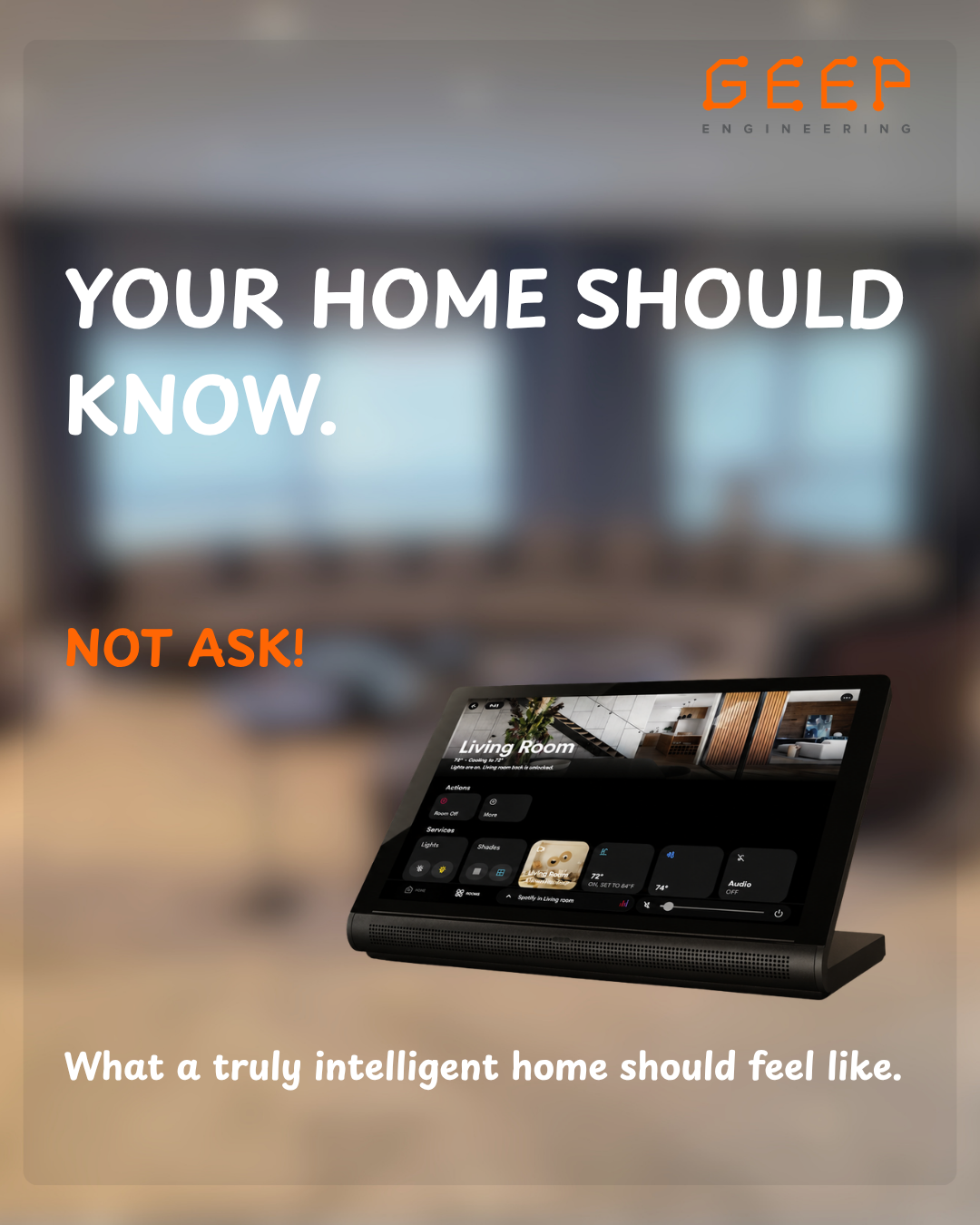
At GEEP Engineering, we believe the real value of a smart home begins when the technology stops feeling like a collection of devices and starts working as one coordinated system. Because the goal isn't to give you more things to control. It's to give you fewer things to think about.
A Smart Home Responds. An Intelligent Home Understands.
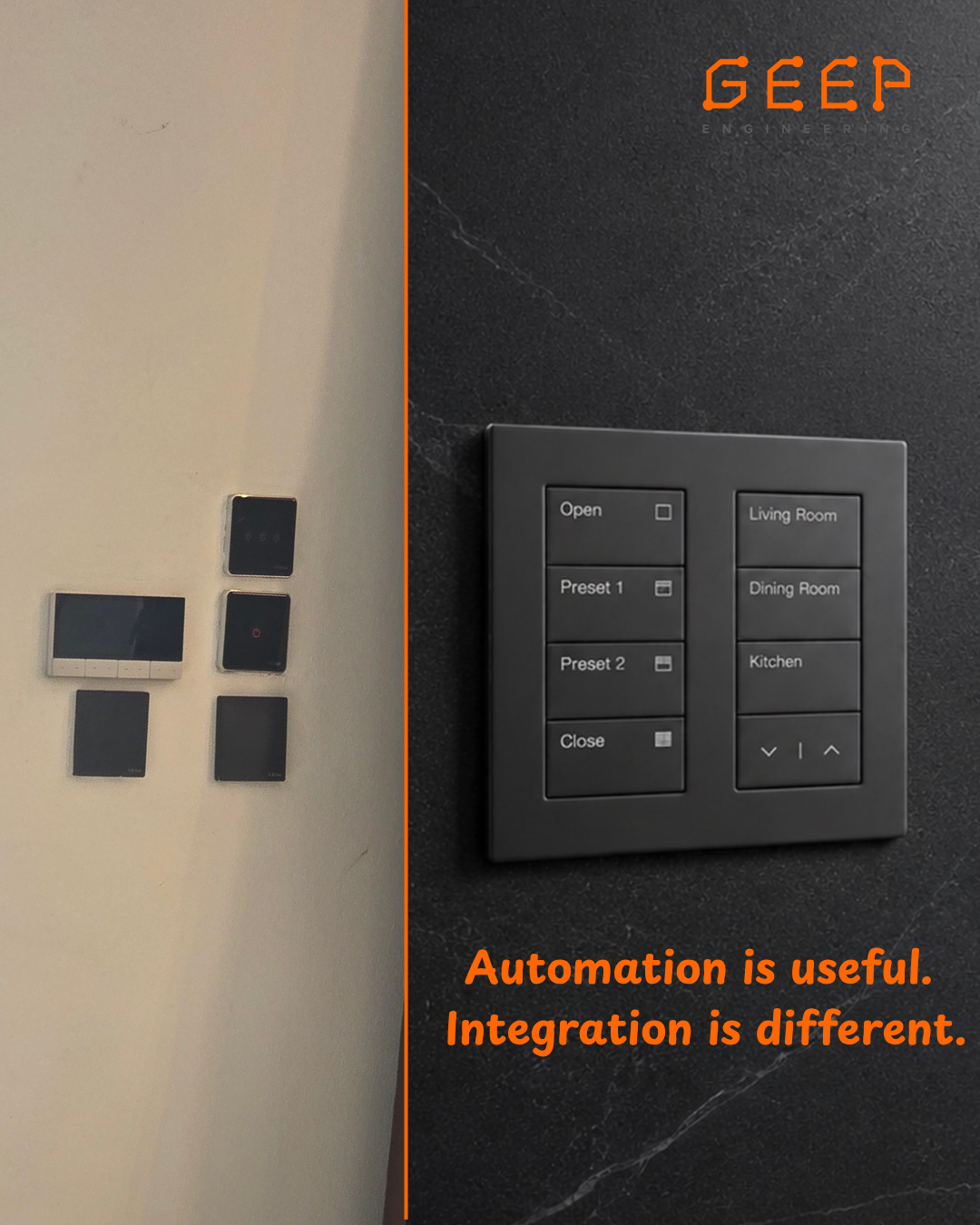
There is an important difference between automation and integration.
A basic smart-home setup can respond to an instruction. You press a button, open an app, or issue a voice command, and something happens. That's automation.
An integrated smart home takes a broader view.
It can work around factors such as time, occupancy, room usage, programmed scenes, and other conditions defined during the system design. Instead of treating lighting, entertainment, climate, security and shading as completely separate systems, they can be coordinated around the way the home is actually used.
The result is a home that feels less like a collection of connected products and more like a single environment.
Think About Coming Home
Imagine arriving home after a long day.
You use biometric access or another secure access method.
The door opens.
The entry lighting comes on.
The temperature is already where you want it.
The shades adjust.
Your preferred music begins.
You didn't have to open five different apps or walk around the house adjusting individual systems.
Your home prepared for you.
That is the kind of experience that integrated automation is designed to create.
Now Imagine Movie Night
You want to watch a film.
One action can trigger a sequence across several systems.
The shades close.
The lighting transitions.
The projector activates.
The AV system comes alive.
The climate adjusts.
Other connected systems can move into the appropriate state.
One moment. Six systems. One experience.
None of these technologies is particularly impressive on its own. The value comes from how they are designed to work together.
It Isn't About More Devices
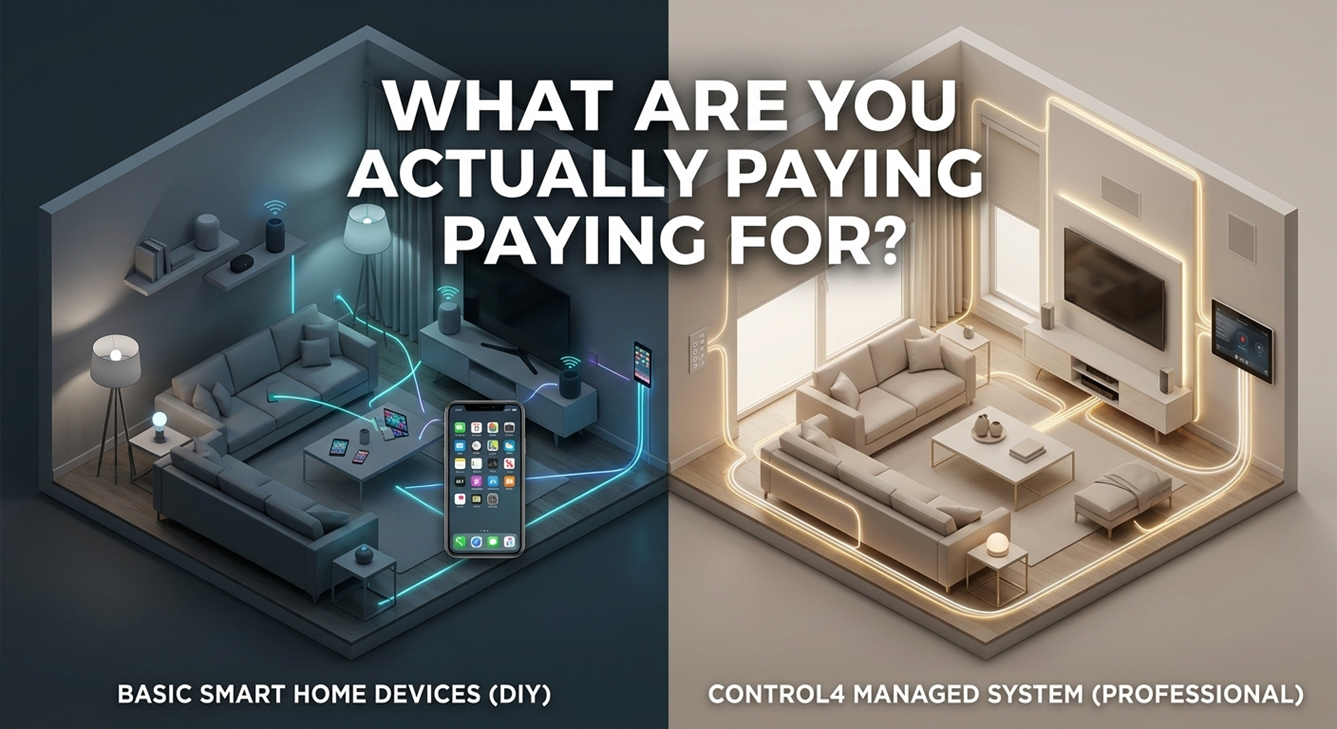
One of the biggest misconceptions about smart homes is that adding more devices automatically makes a home smarter.
It doesn't. You can have smart bulbs, smart plugs, smart speakers, smart switches and several different apps and still have a frustrating experience.
The real question is:
How well do the systems work together?
An integrated residential technology system can bring together:
- Lighting
- Audio and video
- Climate control
- Security
- Motorized shades
- Entertainment
- Access control
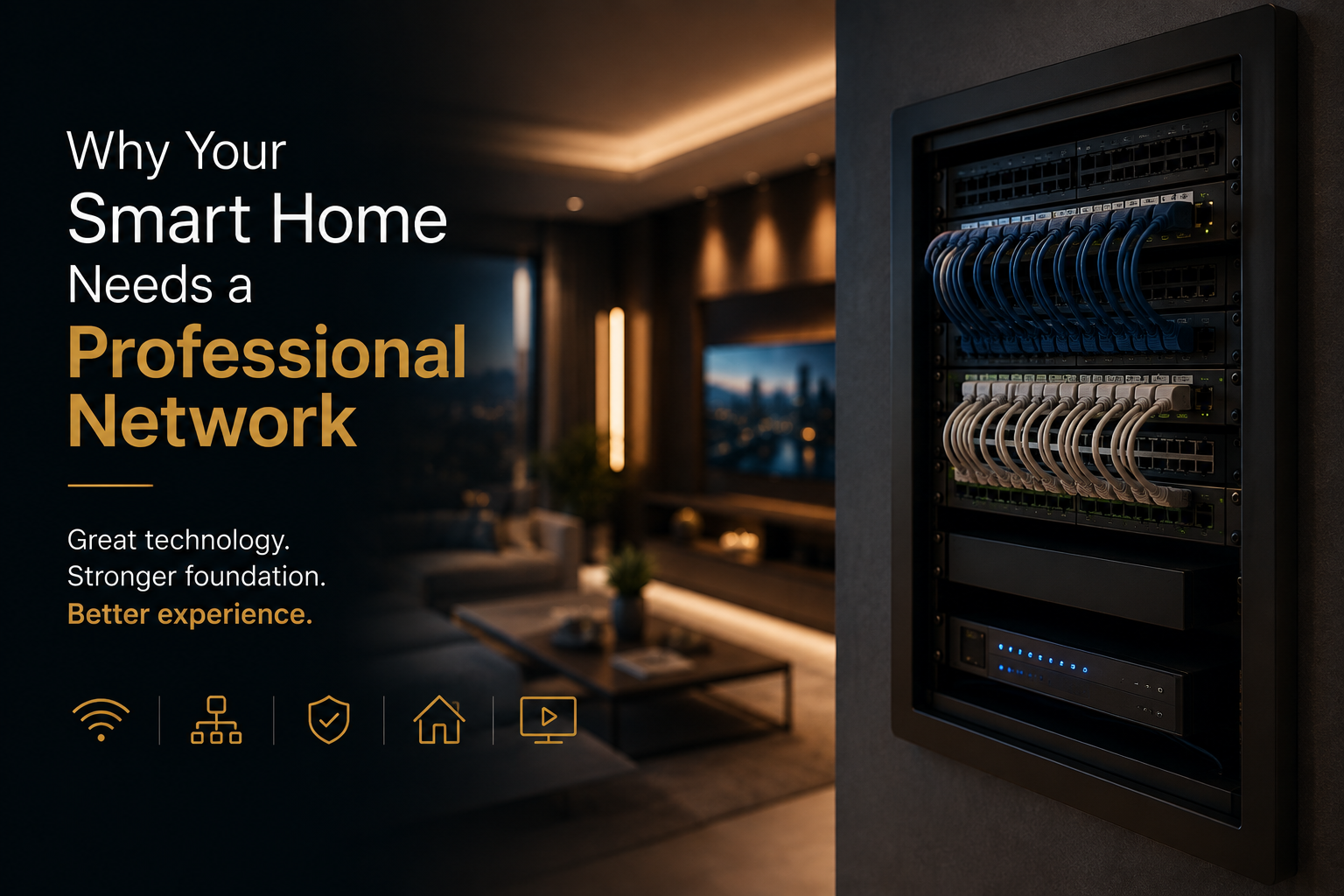
- Home networking
The objective isn't to make the technology more visible.
It's to make the experience more seamless.
One home. One experience.
That's the difference between having automation products and having an integrated smart home.
Why Premium Technology Matters
This is also where the underlying technology becomes important.
At GEEP Engineering, we work with premium platforms and components selected for the requirements of each project.
For example:
Control4 can provide the orchestration layer that brings multiple residential systems together.
Lutron provides precision lighting and shading solutions designed around the way the home is lived in.
Premium AV systems create immersive entertainment experiences across dedicated rooms or throughout the home.
And beneath all of this is the home network — the infrastructure that allows connected systems to communicate reliably.
The brand matters.
The hardware matters.
But the integration matters more.
GEEP's approach is built around system integration rather than simply supplying individual smart devices. The company's current solutions include integrated smart-home control, lighting and shades, entertainment, networking, security, and remote access and control.
Premium Technology Should Reduce Complexity
This may sound counterintuitive.
A more sophisticated home can contain considerably more technology, yet feel considerably simpler to use.
That's because the complexity lives behind the scenes.
The homeowner doesn't need to know which system is communicating with which.
They simply want the lights to respond correctly.
They want the room to be comfortable.
They want the music to start.
They want the cinema to be ready.
They want the security system to work.
And they want it all to happen reliably.
The best smart home is often the one you barely notice.
No hunting for apps.
No wondering which switch controls what.
No managing five unrelated systems.
No technology taking over the home.
It simply works.
The Luxury Isn't the Technology
This is perhaps the most important point.
Luxury isn't having the most devices.
It isn't having a wall covered with controls.
It isn't owning a particular smart-home brand simply because it is expensive.
Luxury is having technology that has been carefully designed around your home and your lifestyle.
It is the ability to move through the house without thinking about the technology working in the background.
It is arriving home and having the environment already prepared.
It is creating a movie experience with a single action.
It is controlling your home without feeling like you're controlling a machine.
The luxury isn't the technology.
The luxury is what the technology makes possible.
Designing the Home Around You
Every home is different.
The right smart-home system for a new-build luxury residence will not necessarily be the same system required for a renovation or an existing property.
That's why smart-home design should begin with the lifestyle, architecture and requirements of the client — not with a list of devices.
It should be designed to work around you.
Your Home. Perfectly Orchestrated.
To discuss a smart-home project for a new build, renovation, or luxury residence, contact GEEP Engineering for a private consultation. Take a look at our past and current projects HERE.