
You invested heavily in a whole-home audio system. So why does it sound incredible in one room — and disappointing in the rest?
This is one of the most common (and frustrating) conversations we have with new clients at GEEP Engineering Limited.
The system is already installed. The walls are closed. The budget has been spent.
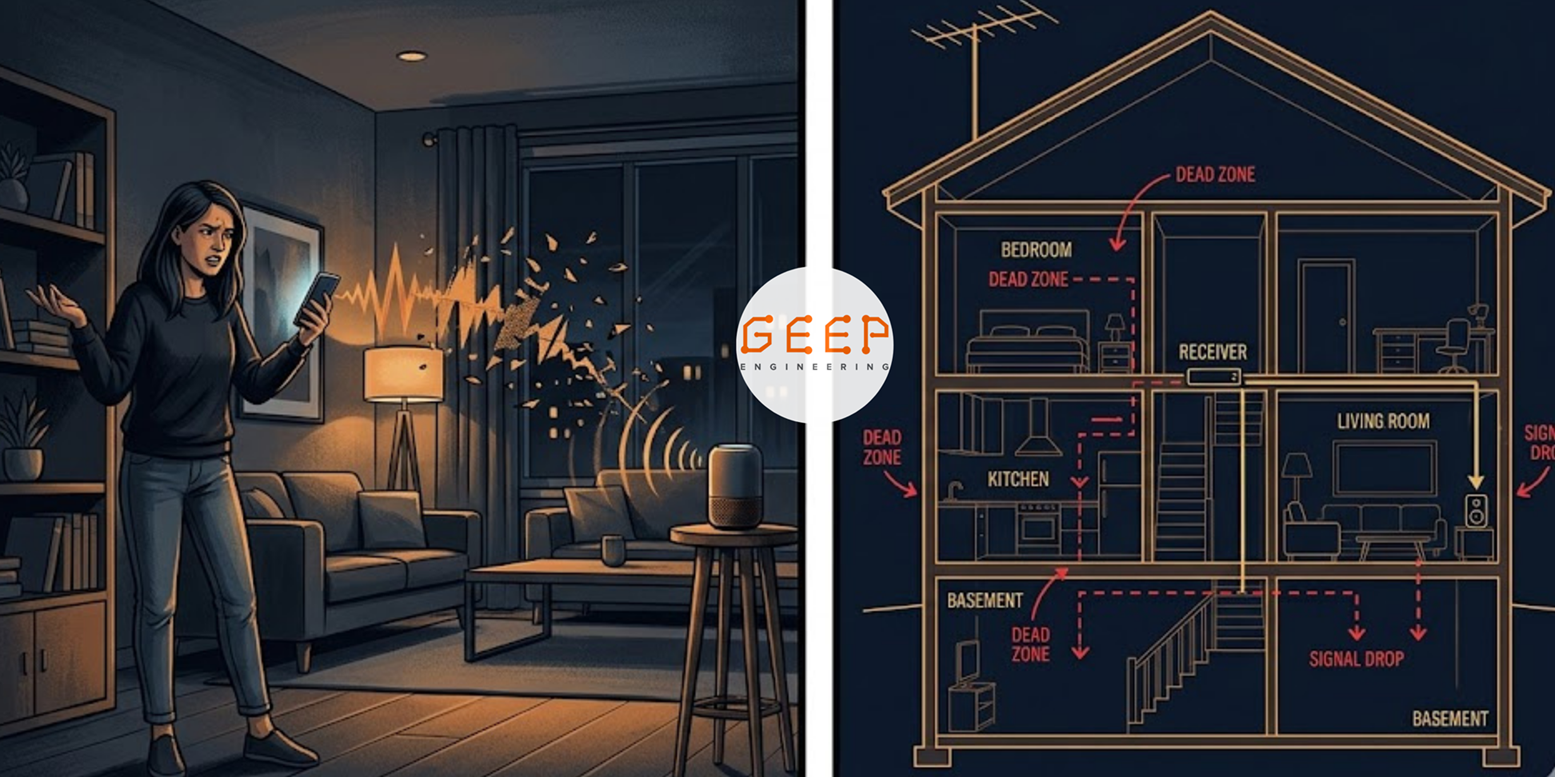
Yet the experience falls short — inconsistent sound, dropouts, poor coverage, or a lack of control. The surprising part? These failures are rarely random.
They are predictable, preventable, and rooted in design decisions made too early — or not made at all.
The Illusion: Why Showroom Audio Doesn’t Translate to Your Home
In a showroom, everything works perfectly:
- Controlled acoustics
- Ideal speaker placement
- Optimized network conditions
- But real homes are far more complex.
Different room sizes, materials, layouts, and usage patterns all affect how sound behaves. Without proper engineering, what worked in a demo space quickly breaks down in a lived-in environment.
The 3 Most Common Reasons Multi-Room Audio Fails
1. The System Was Designed Around Products — Not Acoustics
Every room has its own acoustic identity.
Factors like:
- Ceiling height
- Open-plan layouts
- Hard surfaces (tiles, glass)
- Soft furnishings (rugs, curtains)
…all influence how sound travels, reflects, and settles.
When systems are designed based purely on equipment specifications, speakers are often placed for convenience — not performance.
The result:
- Echo and harshness in some rooms
- Muffled or uneven sound in others
- Poor listening balance across the home
At GEEP Engineering Limited, acoustic analysis is the starting point — not an afterthought. Every decision flows from how sound should behave in your specific space.
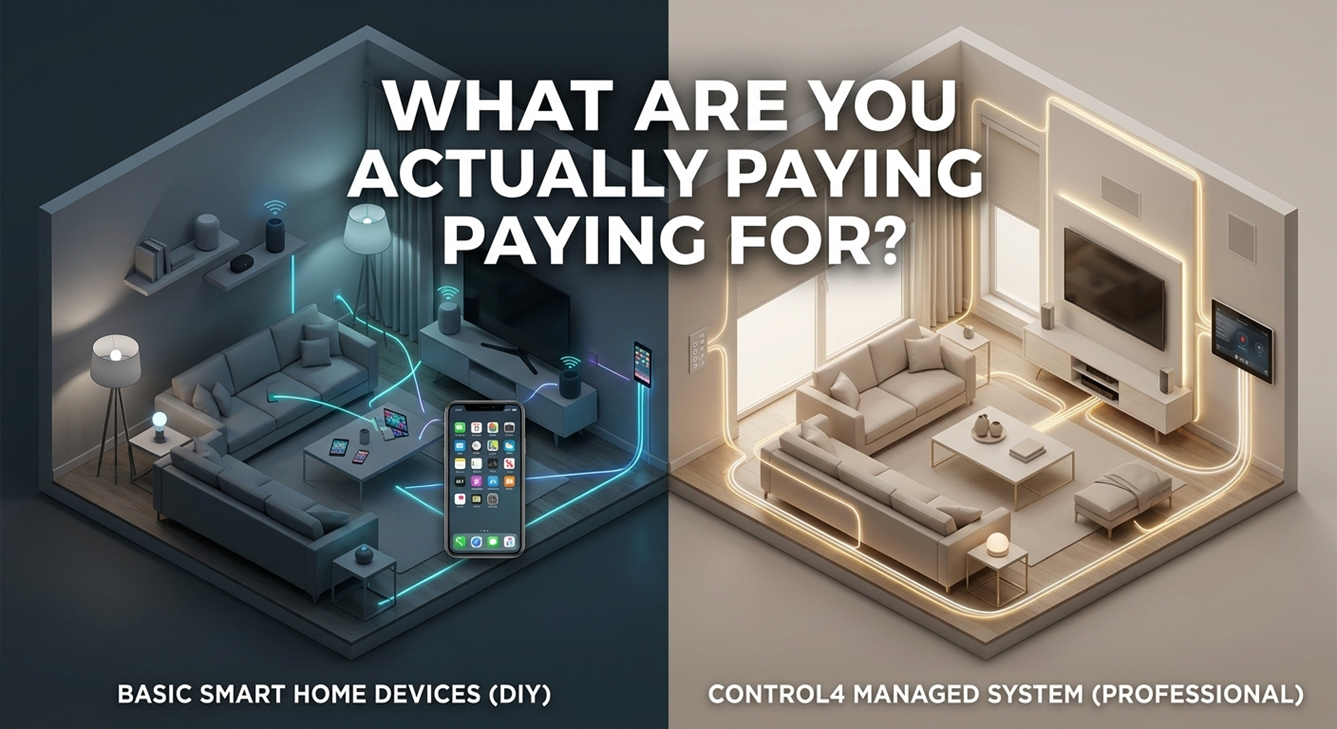
2. Zoning Was Treated as an Afterthought
Many installations treat multi-room audio as a simple distribution problem:
“Run cables everywhere and you’re done.”
But true zoning is about lifestyle alignment, not just coverage.
Each space in your home has a different purpose
- Living room → immersive, full-range audio
- Kitchen → ambient, background listening
- Home office → clarity at lower volumes
- Bedrooms → controlled, subtle output
- Without proper zoning design, you get:
- Inconsistent volume levels
- Poor source control
- A system that feels rigid instead of intuitive
- Effective zoning means:
- Independent control per room
- Tailored audio behavior
- Seamless transitions between spaces
This is where Home Automation plays a critical role — ensuring your audio system adapts to how you actually live.
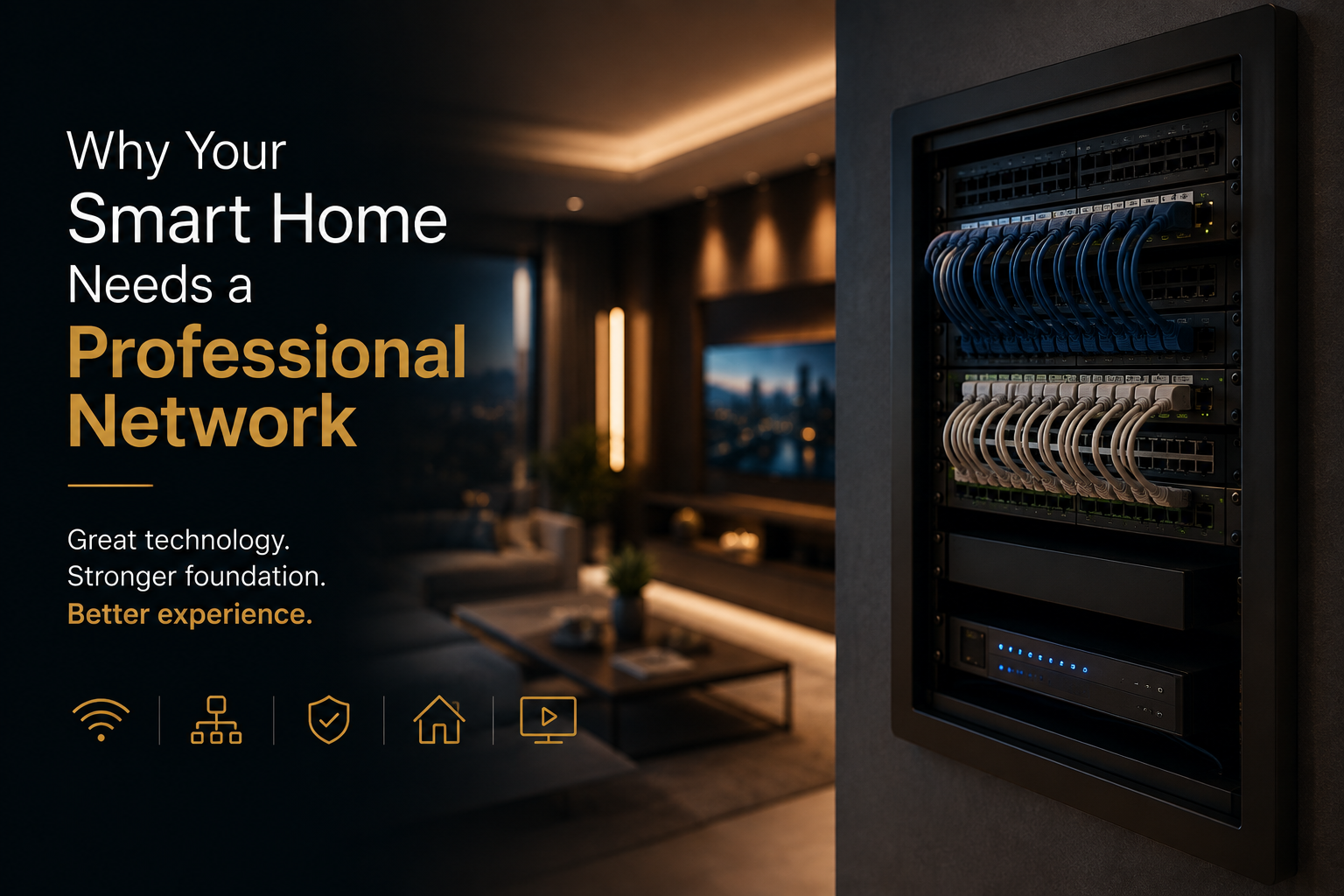
3. The Network Wasn’t Built to Support Audio
Modern multi-room audio systems rely heavily on network infrastructure.
If the network isn’t properly designed, even the most premium equipment will underperform.
Common issues include
Audio dropouts
Lag or synchronization delays
Inconsistent connectivity between rooms
These problems are not caused by the speakers — they’re caused by the foundation they run on.
A properly engineered system requires
Dedicated bandwidth planning
Stable, full-home coverage
Structured network architecture
At GEEP Engineering Limited, network design is not separate from AV — it’s an integral part of delivering a seamless experience.
What Great Multi-Room Audio Actually Feels Like
When done correctly, a multi-room audio system becomes almost invisible.
Music flows naturally from room to room
Volume and tone feel appropriate in every space
Control is intuitive — no learning curve, no frustration
Integration with lighting, climate, and control systems feels effortless
You don’t think about the system.
You simply enjoy the experience.
Why Timing Matters More Than Budget
One of the biggest misconceptions is that better results come from spending more.
In reality, the most important factor is when the system is designed.
If AV and infrastructure planning happen
After construction → limitations are inevitable
During installation → compromises are made
Before construction → everything aligns
The right time to design your audio system is before the walls close — not after the problems appear.
The GEEP Engineering Approach: Engineering, Not Guesswork
At GEEP Engineering Limited, we approach AV as an engineering discipline.
That means
Acoustic-first design
Lifestyle-driven zoning
Robust network infrastructure
Seamless system integration
The goal is simple:
Deliver consistent, high-quality audio in every room — without visual or operational complexity.
Conclusion: Don’t Fix It Later — Design It Right
A great multi-room audio system isn’t defined by the equipment you buy.
It’s defined by
How well it’s designed
How early it’s planned
How seamlessly it integrates into your home
If your current system is underperforming, it can be improved.
But if you’re still building or renovating, you have a far more powerful opportunity: Get it right from the start.
Ready to Get It Right?
Whether you’re planning a new build, renovating, or upgrading an existing system, the difference is in the design.
Start the conversation early
🌐 www.geepengineering.com
📩 hello@geepengineering.com
Smart Home Automation Technology Branding Control4 Luxury